Friday, 20 March 2015

Film (Home viewing catchup): Pudsey The Dog: The Movie (2014)


Director: Nick Moore
Screenwriter: Paul Rose

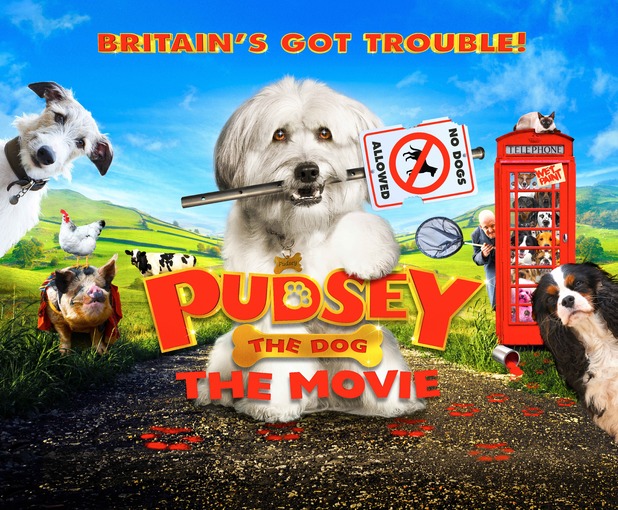
The Pudsey act is perhaps tolerable for a 2-3 minute YouTube video but isn't anything worth not changing the channel over and had any feature-length cash-in had a story, been adequately-shot and enough amusement to pass the time innocuously, this might have been vaguely passable as something for the Children's Film Foundation.  But we don't get that.  What we do get is plod rather than plot, a TV talent show star seemingly channelling the voice of one of his judges (and, with his farm animal co-stars, occasionally aided by rubbish digital mouth work which is so below the standard set by Babe), badly-shot slapstick and a seemingly 'U' rating-friendly cumshot gag, which even Michael Bay might have thought would be a bit much in a children's film.  There isn't even that much of Pudsey walking on his hind legs.

Film: Chappie (2015)


Starts out as Robocop with dog-ears (or K9 meets Pudsey/any dog that can walk on its hind legs). Essentially about an amnesiac police officer being raised by a gang, it is both too sweary and graphic for anyone under the age of 15 yet has preschool-level moralising (a children's book on the story of a black sheep provides an oh-so subtle analogy). Good cinematography and synthy scoring and Blomkamp's continued throwback to more adult SF action fare indicates quite capable hands for the next 'Alien' instalment.

Tuesday, 3 March 2015

Film: 'Fifty Shades of Grey' (2015)

TITLE: Fifty Shades Of Grey
YEAR: 2015
STUDIO: Universal
DIRECTOR: Sam Taylor-Wood
SCREENWRITER: Kelly Marcel (based on the novel by E.L. James)


On the same day I watched this film, my parents came home from a little holiday and had bought me some cheese, the package of which promised a hint of blue.  Anyone going into this film hoping for some cheese will be disappointed but there is at least a hint of blue in it.


Based on the vastly popular bestseller by E.L. James and adapted by the writer of the vastly superior Saving Mr Banks (2013), perhaps the film-makers should have learned a lesson from that film and followed Disney's lead in how they chose to adapt the source material despite the author's protestations.  If the film-makers had indeed tried to adjust the story due to questionable material (hands-up right now, this author has only merely scantly glanced at the source material), they have come up with something that seems both compromised and at the same time nothing that members of the kink community should be protesting about.  Compromised because they may well have tried to "improve" on the source text, ethically speaking, but also having to be saddled with the two leads giving monotonous readings for the duration.


The leads in question being Anastasia Steele (Dakota Johnson) - a virginal English Literature student with an annoying name, and 27-year-old-but-looks-12 billionaire Christian Grey (Jamie Dornan), who is clearly an alien or a robot, based on the evidence of Dornan's performance.  They are introduced to each other when Steele comes to his office for an interview for the student magazine and she makes a very contrived trip onto the floor.  For some reason, she is soon taken with him and for some reason, he starts demonstrating stalker tendencies.  Early warning signs include when he informs her that he won't touch her without her written consent but pretty much a minute later changes his mind in a lift and says "Fuck the paperwork!" before cornering her for a snog.  At another point Ana phones him while drunk on a night out and he comes over to rescue her from a friend coming onto her (and no, not in that way).  Ana swoons and regains consciousness in a bedroom and in a new set of clothes with an 'Alice in Wonderland' plot device at her bedside - a bottle of something that says "Drink me" and something the says "Eat me".  So, like any idiot, she does.  Apparently Christian redressed her and slept at her side but nothing further - "Necrophilia is not my thing", he claims.  Dude, that's not the word for what it would have been - this is the first of two instances where the film-makers tread around that particular subject like it was an eggshell.  The other is when it turns out Grey was seduced at the age of 15 by his own "Mrs. Robinson".  Mrs. Robinson wasn't a paedophile though, although Ana's refers to the seductress as a "child abuser" for some reason.


Grey also gifts Ana with old books, a new computer, and a car, and soon she is taken to his place.  He claims he doesn't do romance but he does show what he does do - he has a "play room" (yeah, he's into that sort of thing).  Ana reveals that she's a virgin and he decides that's something that needs rectifying.  Wanker.  What follows is the first of a few sex scenes that reminds us that this is a film for "adults" (through the eyes of mums that were technically too old for Twilight).  It's vaguely surprising to see a mainstream Hollywood film have this kind of frank nudity on display but it's not particularly onanistic stuff.  If anything, Steve McQueen's Shame (2011) could serve as a palette cleanser and the quasi-religious flogging scene (accompanied by Church choir courtesy of Danny Elfman's score) serves as a reminder to go back and re-watch Ken Russell's The Devils (1971).  Even the seemingly stop-motion animated subliminal "flash" (oh, I see what they did there) of a close-up of Dornan's crotch as he unzips just brings to mind the dancing penis from Bruno (2009).


One can detect the Twilight roots with regards to the Grey character - he's a protective guy who at one point saves our heroine from being knocked down and likes to play the piano.  So it seems Grey's way of doing things is to set up a contract if Ana is to be his submissive (hardly an appealing selling point for the lifestyle) and she proposes a business meeting so they can negotiate (zzzzzzz).  At this meeting, she declares that there is to be no anal fisting (you'd think at this point, the film-makers were sniggering behind the camera like the audience would be while E.L. James gives them the evils).  Perhaps unfortunately, this wasn't directed by Paul Verhoeven nor written by Joe Eszterhas, although the nearest to Eszerthasan it gets is when Grey declares "I don't make love.  I fuck.  Hard."  Still, Showgirls (1995) it ain't.


Ana is reluctant to sign the contract and seems to prefer a "normal" relationship.  She asks Grey at one point why he's trying to change her, and he tells her it's the other way round.  There's no real evidence of this except when he's persuaded to stay in bed with her the whole night and actually smiles (sorta) in a newspaper photo taken of the two of them together.  We don't actually really care about these characters although by the end of the film, perhaps through its sheer length, we at least feel like we've known them and have been in their company and any "nostalgia" felt when seeing them in subsequent sequels would be like seeing Bella and Edward in a new Twilight film even if you weren't a fan of the previous ones.
 
To be fair, even if the kink lifestyle isn't given a fair hearing in this film, it is possible that the film (I can't comment on the novel) can be seen as a cautionary tale on how not to live it.  Anyone curious about the lifestyle could be either attracted to it even more or turned away from it.  And unlike the Twilight movies, this adaptation refrains from using a voice-over by the protagonist, thus creating an objective view of the proceedings and letting the audience decide for themselves.  Rather than a "love story", it's more of an "anti-love story" where the two leads don't end up together.  What would have made it more interesting would be if the film-makers provided a commentary on a seemingly "vanilla" (i.e. "normal") equivalent of a dominant/submissive relationship, such as that in which the woman is regarded and treated as a "princess".  Here, they could even have added an anti-monarchy agenda.


As with Jupiter Ascending (2014), it's a bit of a shame this film presumably wasn't edited by the makers of the film's trailer - the one that showcased Beyoncé's theme song "Haunted", and succeeded in making the film look like a fragrance advert.
Friday, 20 February 2015

Film: Project Almanac (2014)


In which a bunch of young people build a time machine based on plans left behind by the lead's dead father after seeing the lead on a home movie of his ten-year-younger self's birthday.  The screenwriting debut of writers Jason Pagan and Andrew Deutschman as well as the feature debut of director Dean Israelite - the cousin of Jonathan Liebesman, he who directed Platinum Dunes' The Texas Chainsaw Massacre: The Beginning (2006) - this sits alongside The Purge (2013) in the Non-Franchise Science Fiction section of Platinum Dunes' output.  A found-footage movie (which ends with the footage being found), it's USP is that the footage concerns its characters travelling through time and capturing on the camera both the time travelling and the effects the characters' actions have on the timeline (including a Back To The Future-esque fade-out variation of the Blinovitch Limitation Effect).  As the characters make mistakes and travel back again and again to fix things, it makes a verbal reference to Groundhog Day (1992) as well as Looper (2012) (marking a character in the past and witnessing its effects on them in the present) and - in what is perhaps the most flaccid "geeky" reference imaginable - Doctor Who.

As with slasher movies, its leads aren't people that we particularly care about, the blonde girl barely registers, the central lead Jonny Weston is clearly more than ten years older than his past self but Sam Lerner does seem a suitable, if not better, replacement for Shia LaBeouf if they ever consider bringing Sam Witwicky back to the Transformers movies.  This is more of a film where you don't character about the characters but you're more interested in what happens to them.  The plot fairly aimlessly wanders once they have figured out how the time travel works and use it to their own ends, such as winning the lottery (and using it to help the lead's mum), getting back at a high school bully and a teacher as well as - albeit with questionable ethics - getting the girl (cf. About Time, 2013).  The found-footage motif is really only justified by the time travel angle but as with Cloverfield (2007), the filming and editing techniques might be put to interesting use outside of the 'found-footage' genre.  Also, Imagine Dragons' Radioactive gets performed at a gig, the usage of which in any film might be enough to bump up a star rating.

Friday, 6 February 2015

Film Brief: 'Big Hero 6' (2014)


TITLE: Big Hero 6
DIRECTOR: Don Hall, Chris Williams
SCREENWRITERS: Jordan Roberts, Daniel Gerson, Robert L. Baird (based on the characters created by Duncan Rouleau and Steven T. Seagle) (Heads of Story: Paul Briggs, Joseph Mateo)

IN BRIEF(ish):
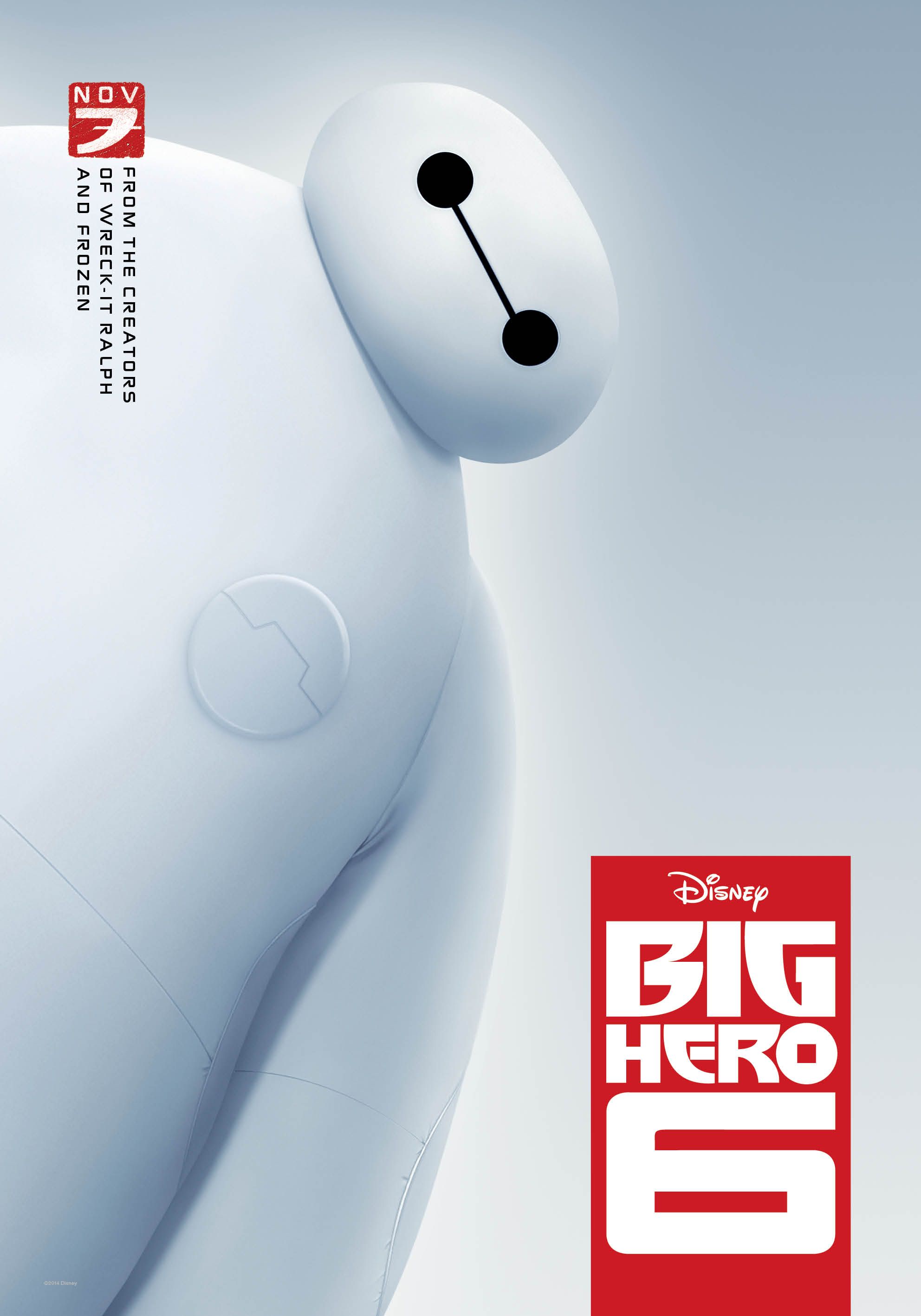
After plundering fairy tales for stories to integrate into what would become the "canon" of Animated Classics (the most recent example being the seemingly immortalised Frozen), Disney more "modern mythologies", such as video games in 2012's Wreck-It-Ralph and now Marvel comics in Big Hero 6.  And indeed, after the Marvel Cinematic Universe turned going to the movies into homework assignments (the biggest chore being 2013's Thor: The Dark World), Big Hero 6 is one of the best looking of the latest Marvel offers.  The design of San Fransokyo makes this Disney's Blade Runner and it makes a great case for the good that CGI can be put to as well as what depth to CG animation that 3D can bring.  It is also one of the most fun so far.  On my so-far initial viewing of Guardians Of The Galaxy (2014), I could not get into it and dismissed it as a Saturday morning cartoon on a similar par to DC's flop Green Lantern (2011), although admittedly it may have been as much to do with the environment in which I was watching it and will give it another chance soon.  But Big Hero 6 is proper good fun and a real treat to take kids to see as a Saturday matinee.  It is funny, even if not quite in the same way as Wreck-It-Ralph's near-Aardman-esque humour, isn't entirely clean-cut when it comes to deciding it's heroes and villains (even the protagonist makes a not particularly heroic choice) and it has a likeable USP character in inflatable robot Baymax.  It does somewhat suffer a common problem from Disney animations in that it isn't easy to get emotionally invested in its CG humans (Frozen perhaps comes close) and one set piece gag about Baymax getting inebriated as a result of running low on batteries is simply a one-off and is never paid off in a way one would expect in the film's climax.

Sunday, 25 January 2015

Film Brief: 'Ex Machina'


Title: 'Ex Machina'
Writer and Director: Alex Garland

In Brief:
This one was watched knowing next-to-nothing about it and is perhaps best watched that way.  For at least half of it, it comes across as Black Mirror-lite with less of the biting satire but things then do turn nasty.  But whereas Black Mirror tended to be conceptually nasty (the conclusion of 2014's Christmas special being perhaps most delicious example and this film's ending is admittedly reminiscent of it), this relies more on being lurid (although a scene of self-harm does recall a chip-removal scene from 2011's The Entire History Of You).  Plus, there is significantly more nudity than is likely to be found in any future BM episode.  You may not miss much by waiting for a home-viewing release but it does have good key performances.  Oscar Isaac is consistently untrustworthy and Domhnall Gleeson is a good young vulernable Everyman (it makes for a good, albeit adult, opening cinematic bookend to be finished at the end of the year with their appearances in December's Star Wars: The Force Awakens).  A bewigged Alicia Vikander recalls what John Green would call a "mid-2000s Natalie Portman".

Friday, 9 January 2015

Film Review: 'Exodus: Gods and Kings' (2014)


TITLE: Exodus: Gods and Kings
DIRECTOR: Ridley Scott
WRITERS: Adam Cooper, Bill Collage, Jeffrey Caine, Steven Zaillian

Perhaps less controversial than Noah released earlier in the year but still managing to cause some fuss, partly due to continuing the Hollywood tradition of casting largely caucasian actors in Biblical roles.  But had that been the only flaw, one would not have particularly minded, had it been in the tradition of Biblical epics in other aspects.  If Noah was something of a diverging text that was not made purely for Christian audiences, one can detect something of what kind of worldview is behind this latter offering from the opening text telling us that it is set in such-and-such-a-year B.C.E.  There is also something to be said of the portrayal of God, manifested as a petulant boy (recalling Juilette Caton's Satan-as-guardian-angel in The Last Temptation Of Christ, 1988) who makes tea, gets cross and - in the words some people might use - is a bit of a little shit.  Also, the film - or rather Ramses (Joel Edgerton) brings up, perhaps understandably, the ethics of a God who would sanction mass infanticide.  It is possible to suggest that in this film, Ramses comes out of it pretty well.

As with Scott's Robin Hood (2010), there is something of an "early film" approach with expository text setting up the background to the story mixed with slo-mo footage of Egyptian slavery presented in 3D that does, admittedly, bring some resonance for someone who was raised in a religion in which this was a key story.  It is not only here that the 3D does prove rather effective - there is also quite a few shots of flying birds that helps creates some depth in some impressive photography.  There is also some pretty terrific location footage.

As suggested earlier, had this been a traditional, albeit whitewashed, Hollywood Biblical epic, it might have proved satisfactory but until roughly the half-way point, it would not pass muster as Sunday afternoon television.  Things shift a bit from the moment Moses (Christian Bale not having much of a commanding presence in his role of protagonist and using some kind of accent) is knocked out and meets God and sees a burning bush while - for some reason - being buried up to his face and not being asked to remove his sandals.  It goes a little bit Last Temptation-y when a post-bush Moses returns to Egypt and chooses the bow (whereas Willam DeFoe's Jesus had an axe) and trains a bunch of Merry Men.  The "fun" really starts when the Plagues are occuring with a rather Nolan-esque twist (the sea turning to blood is caused by crocodiles massacring each other) and Ewen Bremner is brought in as an "Expert" to explain the science behind the apparent supernatural (during this sequence, Scott makes some choice editing with some comic hanging).  The red sea sequence is also re-envisioned so the waves no longer pass with a narrow path to cross but rather it dries out almost altogether before the waters return for a Moses/Ramses face-off.  What else impresses about this sequence is a collapsing cliffedge which sees a lot of Ramses' soldiers and their chariots fall victim to a thin road (this film is also unkind to horses).

It's a near acceptable half that shows what potential this film had, but if I wanted "heresy", give me Aronofsky's Noah, as exhausting as it is.